Hobbies
What Do I Need to Start Pasta Making (2026): 5 Things, About $163
Start making fresh pasta with five useful tools for about $163. The manual roller does the hard part, while the rest keeps dough, flour, and noodles under control.
Last checked: 2026-09-18
Pack total ~$163 for 5 picks
What’s in this pack
5 itemsOne click adds every shoppable item in this pack to your Amazon cart. Budget picks stay as individual links below — grab just what you need.
- MARCATO Atlas 150 Classic Manual Pasta Maker Machine, Made in Italy, Chrome Steel with Black Hand Crank $105.54 Check price →
- Etekcity Food Kitchen Scale, 0.1g with Bowl (11 lb) ~$19 Check price →
- Bench Scraper / Dough Cutter (Stainless Steel) ~$7 Check price →
- Cambro 6-Quart Round Food Storage Container with Lid ~$12 Check price →
- Utopia Kitchen White Flour Sack Towels, 12 Pack (28 x 28 Inch), 100% Cotton ~$19 Check price →
Prices are approximate — tap any item for the live price. We earn a small commission if you buy, at no extra cost to you.
Buy the manual roller if you want to make pasta more than once. The Marcato Atlas 150 is the pick here because it rolls evenly, cuts fettuccine and tagliolini, and does not ask you to find an outlet beside the counter. Five useful tools cost about $163 before flour and eggs. That is enough for a first batch this weekend, without turning the kitchen into a restaurant supply room.
The short list
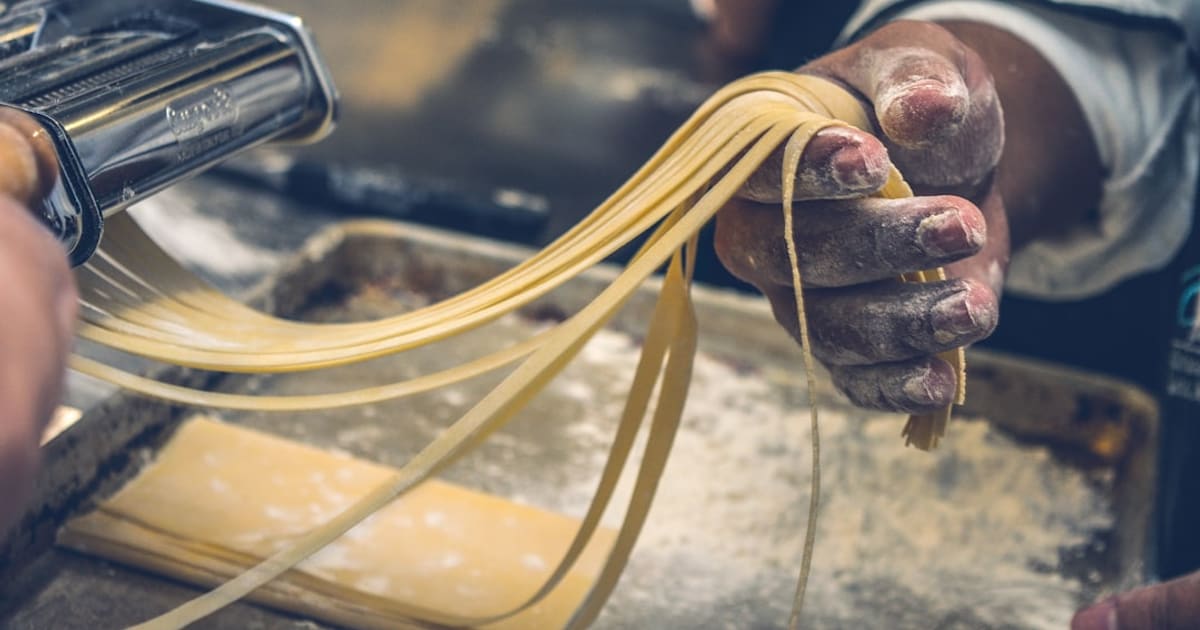
A manual roller and cutter ($105.54): MARCATO Atlas 150 Classic Manual Pasta Maker Machine, Made in Italy, Chrome Steel with Black Hand Crank. The Atlas 150 clamps to the counter, rolls sheets up to 6 inches wide, and has ten thickness settings. The included cutter handles fettuccine and tagliolini. Start on a wider setting, fold the sheet, and pass it through again until the dough feels smooth. The machine is not dishwasher safe, so brush it clean when the dough has dried.
A scale that reads 0.1 grams (about $19): Etekcity Food Kitchen Scale, 0.1g with Bowl (11 lb). Pasta dough is forgiving, but weighing the flour and eggs makes the second batch repeatable. The scale also helps when you adjust hydration after the first mix. Put the bowl on it, tare, add 200 grams of flour, then add the eggs. You will know what changed when the dough is too stiff or sticky.
A bench scraper (about $7): Bench Scraper / Dough Cutter (Stainless Steel). Use the flat edge to gather flour, cut the dough into portions, and lift a sticky sheet from the counter. The measuring marks are useful, but the sharp edge is the reason to buy one. A knife works in a pinch. The scraper is faster and keeps you from dragging dough across the worktop.
A lidded container for the dough (about $12): Cambro 6-Quart Round Food Storage Container with Lid. Pasta dough needs a rest before rolling. The 6-quart container gives a two-egg batch room to sit without drying out, and the clear sides let you see whether the dough has relaxed. Cover the dough for at least 30 minutes. A mixing bowl with a plate over it works while you decide whether this hobby is sticking.
Cotton towels for drying the noodles (about $19 for 12): Utopia Kitchen White Flour Sack Towels, 12 Pack (28 x 28 Inch), 100% Cotton. Lay a clean towel over a sheet pan or the counter, dust it lightly with flour, and spread the cut noodles in a loose layer. The towel keeps the pasta from sitting in a wet patch. You do not need a dedicated drying rack for a first batch, and twelve towels will find other jobs around the kitchen.
The cheap way to try it first
You can test fresh pasta for the cost of flour and eggs. Use a rolling pin, wine bottle, or even a straight-sided glass to flatten the dough. Cut tagliatelle with a sharp kitchen knife and cook it right away. Borrow the machine before buying one if you are unsure. The free path is less uniform, but it teaches you the part that matters: how the dough should feel after kneading and resting.
What to skip
- An electric extruder. It makes a different kind of pasta and costs several times more. Learn rolled dough first. Upgrade when you are making short shapes every week.
- A pasta drying rack. Towels and a sheet pan handle a dinner-sized batch. A rack becomes useful when you make pasta for a crowd, not when you are learning.
- A ravioli stamp set. Cut sheets and make fettuccine before adding filled pasta. Ravioli adds filling, sealing, and storage problems before you know whether the dough is right.
- A pasta-specific flour on day one. Regular all-purpose flour and eggs are enough for a first try. Buy 00 flour after you have made a batch and want a softer, silkier sheet.
The math and the first weekend
$105.54 + $19 + $7 + $12 + $19 = $162.54, so call the tool total about $163. Ingredients are extra and vary by grocery store. On Saturday, mix 200 grams of flour with two eggs, knead until smooth, cover it, and let it rest for 30 minutes. Roll one small piece at a time, cut it, and cook the noodles within a few hours. If the pasta tears, let the dough rest longer. If it sticks, add flour in small amounts instead of dumping a whole handful on it.
Related packs
What Do I Need to Start Sourdough (2026): 6 Things, About $67
What Do I Need to Start Espresso (2026): 6 Things, About $461
Frequently asked questions
How much does it cost to start making pasta at home?
About $163 for the five tools here: $105.54 for the Marcato roller, about $19 for the scale, $7 for the scraper, $12 for the container, and $19 for the towel pack. Flour and eggs add a few dollars per batch, and you can spend less if you already own a scale and a clean kitchen towel.
Do I need a pasta machine to make fresh pasta?
No. A rolling pin or clean wine bottle and a sharp knife can make a first batch. A pasta machine earns its place when you want even sheets and repeat batches without spending twenty minutes fighting the dough.
What is the best pasta maker for beginners?
The Marcato Atlas 150 is the sensible first pick here. It is manual, has ten thickness settings, and rolls sheets up to 150 millimeters before cutting fettuccine or tagliolini. It is simple enough to learn and solid enough that you will not outgrow it after two dinners.
How we work
How we research and review
StarterPacks Editorial Team researches the products and writes the packs. We choose items for a specific starting point, then check the listing before we link to it.
For each linked product, we open the retailer page to check the price and availability, confirm that its Amazon ASIN still resolves to the right product, and compare important claims with manufacturer specs. We do not call an item hands-on tested unless the page explains what was tested.
This pack was last checked on . We revisit pages when products, prices, or advice change. Prices and stock can move after a check, so the live listing is the final word.
Read about the StarterPacks Editorial Team and our standards.